
 हिन्दी
 English

Official launch and virtual mode
The official demo belongs to Galaxsys, the developer of the original Tower Rush. It should be distinguished from the separate game Tower Rush 2, an operator lobby and a third-party imitation of tower building. For readers in India, this route helps explain the sequence of actions without a casino real-money account.
Before the first action, check the game name, FUN designation and availability of the Build button. The virtual unit describes the current balance mode: changing the interface language does not turn it into a rupee, dollar or cryptoasset. The currency name matters even when the presentation looks the same as a real-money launch.
For Tower Rush demo play, you can open the free demo without funding a cashier account. The official demonstration route does not require an operator's real-money account; a casino's own launch may have a different login condition. A requirement to register in an operator lobby therefore cannot automatically be applied to the provider demo.
The game has individual rounds: you decide whether to add the next floor or end the attempt. There is no shared flight with a second stake panel. The crane and falling-block graphics help you read events, but the server determines action acceptance and final settlement, not the picture's position on the screen.
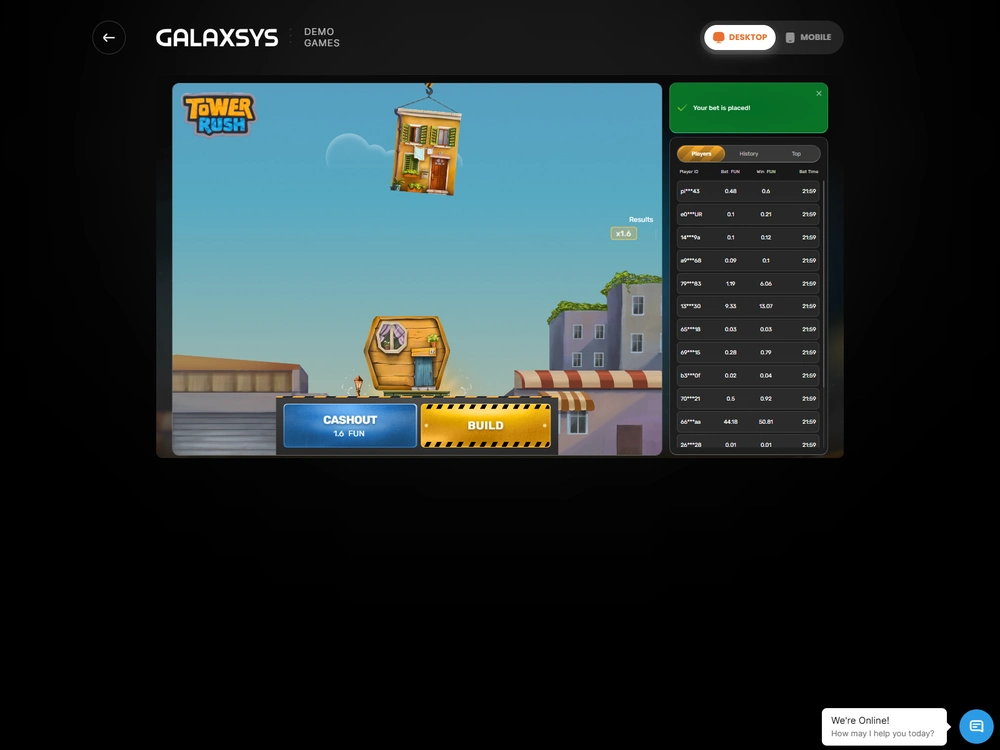
How the demo controls work
Set the amount first, then send Build and wait for the result. After successful placement, you can continue building or collect the accumulated amount with Cashout. This is the choice repeated within a round; each new floor does not mean a new initial monetary stake.
Amount and Build acceptance
The amount field applies to the next accepted stake. In the configuration covered here, values from 1 to 100 FUN are available. The amount can be changed before the first Build is sent. Once the round is accepted, its initial stake remains unchanged, including when a bonus floor appears and further actions occur within the same attempt.
The interface includes All In and x2 controls. They relate to amount selection but do not override the configuration's limit or create a second panel. Do not confuse x2 beside the stake controls with the multiplier of a settled floor: these are different interface locations and functions.
- Check that the balance is labelled FUN and the original Galaxsys game is open.
- Choose an amount in the stake field and read it before submitting the action.
- Press Build and wait for acceptance and the placement result.
- After success, choose to continue or use Cashout.
- Check the final credit and balance before starting a new round.
In the author's episode, a 10 FUN stake was accepted 240 milliseconds after submission. This is the interval for a particular action, not a promised speed for every connection. Pressing again before the response did not create a second wager: the confirmed round had one initial deduction.
While an action awaits settlement, disappearing animation does not itself mean a loss. Check the confirmed state and history of the existing round. There is no need to send a new stake to check the old one: a new attempt and recovery of an accepted operation serve different purposes.
Cashout and final settlement
Cashout ends the round and credits its full payout to the game balance. With a stake of 10 FUN and an accepted multiplier of 1.5×, the credit is 15 FUN. The net result is 5 FUN because the original 10 FUN was already deducted when the stake was accepted. These two amounts are best read separately.
After a successful floor, the next coefficient multiplies the current accumulated amount. The sequence 1.2×, 1.25× and 1.6× therefore gives an overall multiplier of 2.4×. With an initial stake of 10 FUN, that means a total credit of 24 FUN; adding the three coefficients would describe a different, incorrect model.
Continuing retains the risk of collapse except for the amount protected by Frozen Floor. A visibly tall tower does not turn an unfinished round into a payout already received. Reading the result requires an accepted Cashout, the final credit and the balance after settlement, not just the displayed intermediate amount.
On reaching Maximum Win, the interface warns of the limit. In the demo configuration it is 10,000 FUN: a calculated value of 11,250 FUN does not entitle you to receive more than this cap. Continuing after the warning does not increase the limit and can result in losing the unprotected accumulated win.
The 10,000 FUN limit cannot be renamed a universal 100×. The ratio of the limit to the stake changes with the initial amount, while the cap itself is expressed in virtual units. A warning also does not imply automatic completion: the original must not be credited with an Auto Cashout feature it lacks.
Rules, sound and history
Rules opens the current game's rules, while Sound controls audio. Players, History and Top show different views of data; the player table uses the fields Player ID, Bet FUN, Win FUN and Bet Time. Another player's entry in the shared feed is not your personal credit.
Net Position helps distinguish the change in result from the total balance. In one mobile state, a balance of 99,680 FUN was accompanied by −320; that profile began at 100,000 FUN. These are consistent figures for a separate session and cannot be added to another launch's balance.
The coefficient feed can show values below 1×. For example, a multiplier of 0.45× reduces the current accumulated amount; a positive credit does not necessarily mean profit relative to the initial stake. The minimum 1.5× for successful floors applies after Frozen, not to every action in the original.
For a detailed explanation of stake acceptance, final settlement and exceptions, see the Tower Rush rules. Here the controls are considered for FUN, without replacing the virtual balance with a particular casino's cashier conditions.
Session balance and a new launch
The starting balance depends on the demo profile. The author's session starts at 1,000 FUN; separate provider Desktop and Mobile states show 100,000 FUN. Both values belong to their own launches, so neither can be declared the mandatory starting balance for every visitor.
An example with 1,000 FUN
In the session starting at 1,000 FUN, 17 cycles were accepted, of which 16 ended in game settlement. One other cycle was voided with a refund of 7.50 FUN. Separate it from settled stakes when analysing wins and losses, otherwise turnover and the proportion of positive outcomes will use different denominators.
Initial deductions totalled 127.50 FUN, including the cancelled operation. After excluding its refund, comparable game turnover was 120 FUN. Credits on settled rounds totalled 187 FUN, and the net result was +67 FUN. The balance check is simple: 1,000 − 120 + 187 = 1,067 FUN.
This is stake turnover, not an amount that had to be deposited separately. Credits received within the session stay in the virtual balance. Adding all accepted stakes describes the volume of play but does not turn FUN into a deposit or represent real-money spending.
What changes on reset
A new session receives its own starting balance. After the example ended at 1,067 FUN, a new launch started at 1,000 FUN. The −67 FUN difference relates to the reset, not a lost round: there is no new stake, collapse or separate payout to include in the game log.
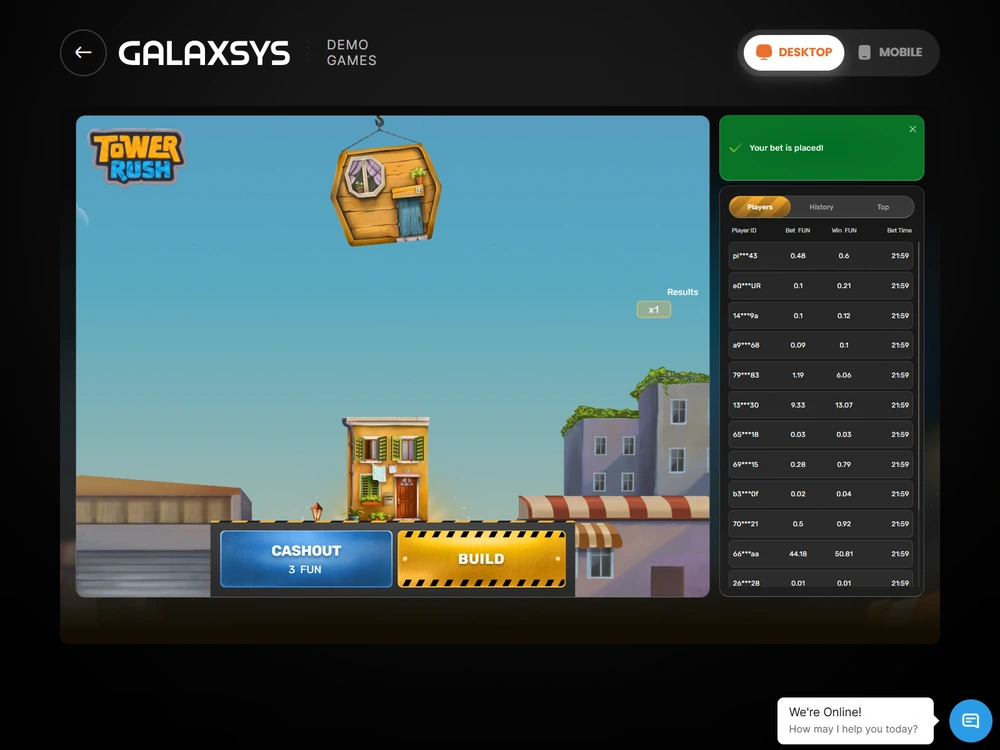
Do not manually transfer the old result into a new session as though it were a win or debt. When comparing two attempts, record each one's start and finish separately. This preserves the distinction between the arithmetic of completed rounds and the technical transition to another virtual balance.
Changing language is not an exchange transaction either. If button labels change, check the current mode and amount, but do not treat a new language as grounds to convert FUN into INR. A real-money wallet requires a separate operator route with its own account and payment conditions.
What the round log shows
The log below lets you trace each balance change, including a zero payout and a return of exactly the stake. Every row belongs to one FUN session, so they can be compared with one another. They are not a forecast of future results or a promise to repeat a positive outcome.
| Cycle | Stake FUN | Total credit FUN | Net result FUN | Balance FUN |
|---|---|---|---|---|
| 1 | 5 | 0 | −5 | 995 |
| 2 | 10 | 15 | +5 | 1,000 |
| 3 | 5 | 0 | −5 | 995 |
| 4 | 10 | 30 | +20 | 1,015 |
| 5 | 5 | 6 | +1 | 1,016 |
| 6 | 10 | 0 | −10 | 1,006 |
| 7 | 5 | 25 | +20 | 1,026 |
| 8 | 10 | 24 | +14 | 1,040 |
| 9 | 5 | 0 | −5 | 1,035 |
| 10 | 10 | 15 | +5 | 1,040 |
| 11 | 5 | 0 | −5 | 1,035 |
| 12 | 10 | 10 | 0 | 1,035 |
| 13 | 5 | 0 | −5 | 1,030 |
| 14 | 10 | 50 | +40 | 1,070 |
| 15 | 5 | 0 | −5 | 1,065 |
| 16 | 10 | 12 | +2 | 1,067 |
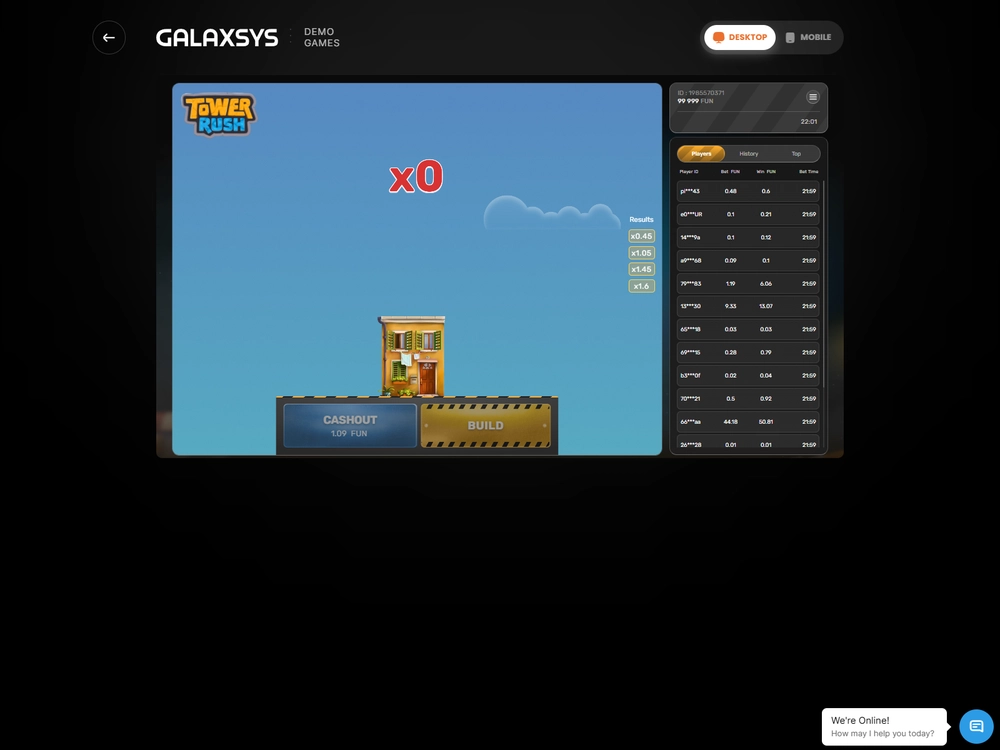
Payout and profit are calculated differently
A positive credit occurred in 9 of the 16 settled cycles, but only 8 were profitable. In the twelfth cycle, a 10 FUN payout merely returned the 10 FUN stake. If every positive credit were counted as a win above the stake, this neutral result would incorrectly be recorded as profit.
Total credit and net result answer different questions. The former shows how much the game settlement returned; the latter shows how much the balance changed after accounting for the stake. Across the entire log, the ratio of 187 to 120 gives 155.83%, but this is the return of a particular short sample, not theoretical RTP.
Three bonus events in specific rows
In the fourth cycle, Temple multiplied the accumulated 15 FUN by 2 to give 30 FUN. The seventh cycle ended in collapse after Frozen at 5×: with a 5 FUN stake, the protected amount was 25 FUN. The eighth showed Triple with a coefficient product of 2.4× and a credit of 24 FUN on a stake of 10 FUN.
The fourteenth cycle is particularly useful for understanding protection. With a stake of 10 FUN, Frozen locked in 20 FUN, then successful continuation took Cashout to 50 FUN. The final credit was 50, not 70 FUN: the protected portion is already included in the larger payout and is not added again.
The log contains four bonus events in total: two Frozen, one Temple and one Triple. The ratio 4/16 equals 25% in this specific sequence. It does not establish the mathematical probability of a bonus floor. Each feature is explained in detail on the bonus floors page.
Returning from the background and cancellation
In the tenth cycle, I returned to the demo after 45 seconds in the background: the 10 FUN stake remained the only one, and the 15 FUN Cashout was credited once. In a separate cancellation, a 7.50 FUN refund restored the balance without increasing profit. These events show different ways an already accepted action can end.
| Event | FUN movement | Meaning for the result |
|---|---|---|
| Cashout with a stake of 10 and multiplier of 1.5× | 15 credited after 10 deducted | Net result +5 |
| Cancellation of a 7.50 stake | 7.50 deduction and 7.50 refund | Net result 0 |
| New session after a balance of 1,067 | New start at 1,000 | A reset, not a loss of 67 |
If the connection is lost after stake acceptance and is not restored, the rules provide for completion after an hour of inactivity. The recorded win is credited automatically. A malfunction of gaming equipment or software follows a different process: the corresponding stakes and payouts are voided and the stake refunded.
A delayed picture and cancellation are not equivalent. First read the existing round's history and final status. If the client shows an unfinished action, do not declare it lost merely because the tower stopped moving: intermediate animation does not replace server settlement.
How FUN differs from real-money play
The demo explains the mechanics but does not replace the conditions of a specific real-money launch. A virtual balance has no external recipient, bank fee or withdrawal procedure. In real-money play, these matters belong to the selected operator, wallet and method, not a single Cashout button.
| Parameter | FUN demo | Separate INR profile |
|---|---|---|
| Stake range | 1–100 FUN | 10–10,000 INR |
| Credit limit per round | 10,000 FUN | 1,000,000 INR |
| Configuration RTP | 96.17–97% | 97% |
| Source of funds | Virtual balance | Operator's own real-money wallet |
| External withdrawal | FUN cannot be withdrawn | Separate cashier operation |
The real-money column describes a particular INR profile, not every casino in India. You cannot apply its maximum stake to the demo or transfer the virtual limit into rupees. Even with identical button names, configurations and restrictions need their own context.
To move on, study the real-money play route: it starts with an operator account and a real-money wallet. FUN does not enter it as a deposit. For mobile launches, consider mobile access routes separately, without treating a casino APK as a standalone game app.
10 casinos: terms in detail
Brief facts from reviews of specific profiles. Game availability and conditions depend on the operator and account.

UPI · INR
- The Galaxsys original in the lobby.
- Android and web access on iPhone.
- Selected welcome offer: game contribution 0%.

USDT
- The Galaxsys original in the catalogue.
- Android: PWA without a separate APK.
- Selected welcome offer: game contribution 0%.

Visa · USD
- The original in the USD profile reviewed.
- Android app and browser on iPhone.
- Selected welcome offer: game contribution 0%.

UPI · INR
- One operator account for the game.
- UPI has its own limits.
- Cashout and external withdrawal are different actions.

UPI · INR
- The original is available on mobile.
- A fee was deducted in the withdrawal described.
- The welcome offer does not count stakes on this game.

UPI · INR
- Separate real-money and FUN modes.
- Android app and browser on iPhone.
- The welcome offer does not count stakes on this game.

INR
- The original and FUN mode are available.
- Android: APK; iPhone: web access.
- Selected welcome offer: game contribution 0%.

UPI · INR
- UPI in the app: from 100 INR.
- Minimum withdrawal for the selected route: 500 INR.
- The Aviator welcome offer does not count Tower Rush.

Restriction for India
- The general terms prohibit registration from India.
- Welcome offer: Shaolin Panda spins.
- The profile rating does not override restrictions.

UPI · INR
- The Galaxsys original in the operator account.
- UPI withdrawal includes a fee.
- Selected welcome offer: game contribution 0%.
What to use the demo for
Use FUN to learn the difference between a stake, intermediate accumulation, protection and final settlement. Start by reading the current balance and Rules, then compare a completed round with its history. This sequence helps explain the interface but does not remove the risks of real-money play or turn a successful demo session into a forecast.
For your own analysis, select one completed log row and reconstruct the balance before it. In the second cycle, this is 995 FUN: deducting 10 and crediting 15 gives 1,000 FUN. The check links three history fields without needing to assume an extra transfer or hidden win.
Then compare it with the twelfth cycle, where the stake and credit are equal. The balance before and after settlement is 1,035 FUN. A positive number in the win column here means the stake was returned as part of the payout; it does not prove that the balance grew. This useful distinction is visible without moving to real-money play.
Finally, distinguish an event within a round from one between sessions. Cashout, collapse and refund of a voided stake close an accepted action. A new starting balance belongs to another launch. Keeping this boundary lets you read history without mistakenly adding a reset to losses.
Compare short series using equivalent measures: the sum of settled stakes, total credit and net result. The number of accepted actions alone is insufficient if one was voided. In this log, seventeen accepted cycles do not become seventeen results for calculating the proportion of profitable rounds.
Careful recording does not change game outcomes. The positive 67 FUN describes a completed sequence, while the next launch starts with its own conditions and results. The demo helps you read Build, Cashout and history; a real-money decision separately requires consideration of possible financial loss and a personal spending limit.
Answers about the Tower Rush demo
Does the official demo require a deposit?
No. The provider's FUN mode requires no real-money deposit. Access to a particular casino may have its own conditions, but these do not turn the official demo's virtual units into a deposit.
Can FUN be withdrawn to a card or wallet?
No. FUN is the virtual unit of the demonstration mode. Cashout settles the round within that balance and does not create a bank transfer, INR payout or cryptocurrency transaction.
Why can the starting balance vary?
Different demo profiles have their own starting balances. The author's example starts with 1,000 FUN; separate provider states start with 100,000 FUN. Compare results within one session while retaining its starting amount.
Does demo RTP match every real-money launch?
Configurations differ. The demonstration range is 96.17–97%, while the INR profile shown has an RTP of 97%. Values belong to their respective settings and do not promise the result of an individual attempt.
What counts as the result after returning from the background?
The final settlement of the existing round. In the episode involving 45 seconds in the background, one 10 FUN deduction and one 15 FUN credit were retained. Receiving the response again does not mean a second win.

About the author
Author: Karthikeyan Sengupta.
Role: iGaming, Betting Sport and Gambling product analyst.
Experience: 7 years in online casinos, gambling and payment systems.
Devices: Realme 14 Pro+, Android 15, realme UI 6.0 / iPhone 15 Pro, iOS 26.5.
Published: 4 November 2026.