
 हिन्दी
 English


What a player's decision actually changes
Here, Tower Rush strategy is considered in terms of managing spending and exposure. No strategy, website or author can guarantee a win, profit or a particular result. This material does not teach you how to win or recover losses. You can lose money even when following control measures.
The player chooses the initial stake amount and decides whether to continue building after a successful floor. The server accepts the action and calculates the result. Pressing a button, block movement and a confirmed payout represent different states; one successful animation is not enough to record a profit. Cashout ends the current round with the specified credit. Another Build leaves part of the result exposed to further risk. The player does not choose the future multiplier. A promise to “always collect on a safe floor” therefore cannot be inferred merely from the presence of an exit button.
The controls here are manual.
A second betting panel and the shared flight of other crash games do not describe the original mechanics. Do not transfer calculations for two bets on one flight to the tower. A short guide to the controls and settlement rules is provided separately in the game instructions.
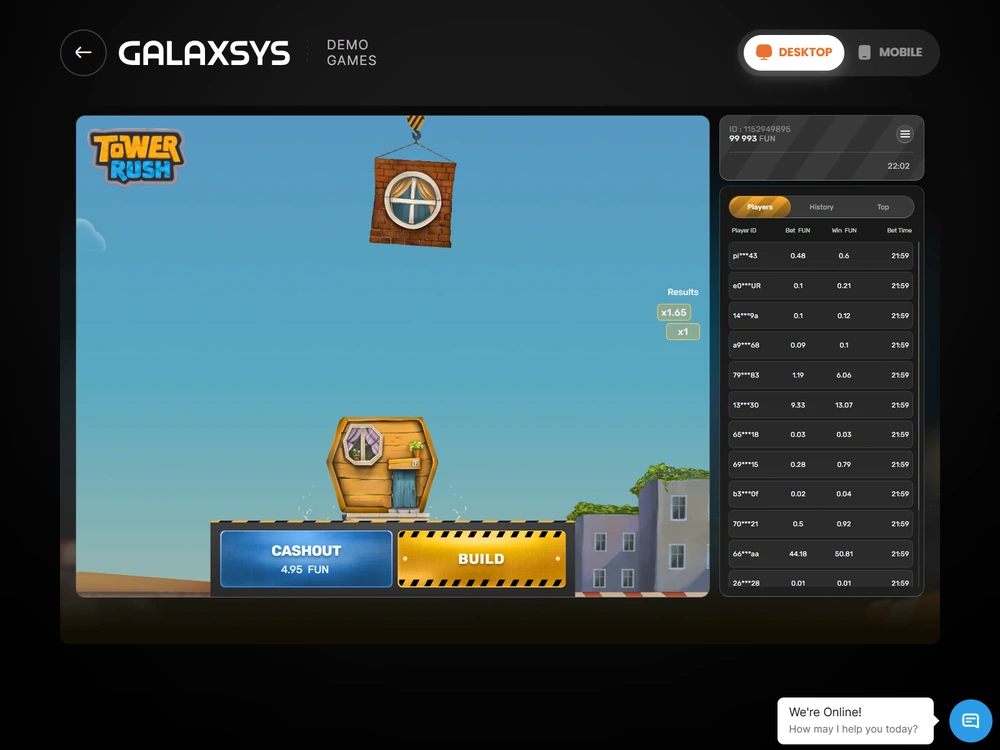
What amount remains at risk after Frozen Floor
Frozen Floor retains the locked amount after a later fall. With a stake of 10 FUN, protection at 2× is 20 FUN. If the accumulated amount has grown to 50 FUN, the excess 30 FUN remains at risk. This is the current exposure of an individual decision, not a reason to call the entire round risk-free.
I ended such a round by exiting with a credit of 50 FUN. The net result was 40 FUN. To calculate it, subtract the initial stake of 10 FUN from the gross payout. The protected 20 FUN is already included in the final 50 FUN and is not credited a second time.
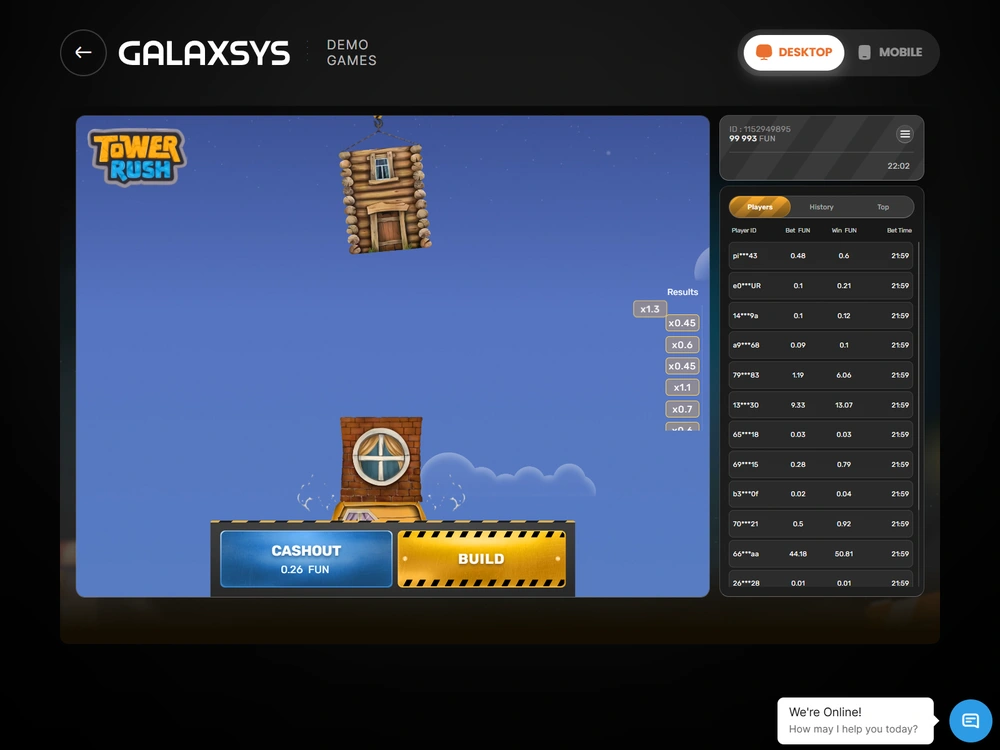
A fall instead of an exit would have retained 20 FUN, with a net result of 10 FUN for that individual round. This arithmetic explains the protection but does not establish the probability of it appearing. No new bonus floors appear after Frozen; subsequent successful floors give a multiplier of at least 1.5×.
Fixed stakes and doubling: what the model shows
Doubling changes the distribution of results and the amount spent, but does not create a positive mathematical expectation. The comparison uses a separate two-outcome model: a gross credit of 2× the stake with probability 0.485, or zero credit with probability 0.515. It does not reproduce the distribution of Tower Rush floors.
The model's expected return is 97% of turnover. The selected distribution determines it. This number is not a measured probability of a successful Build. Both variants start with a bankroll of 2,000 INR, an initial stake of 20 INR and a limit of 100 rounds; Indian rupees serve as the calculation unit.
I calculated 20,000 independent runs for each policy. The first keeps the stake at 20 INR. The second doubles it after a loss and resets it to the initial amount after success. There is no hidden all-in. If the next stake exceeds the bankroll or 10,000 INR, a new round is not accepted.
Shared stopping conditions
Both policies stop at a balance no higher than 1,700 INR or no lower than 2,300 INR after settlement. These levels correspond to a loss or profit of 300 INR relative to the starting bankroll. A maximum round count and a check for enough money to enter the next round apply separately. The order matters: the accepted bet is settled first, then permission to continue is checked. If losses before the round were below the limit, another adverse outcome can take them beyond it. The program stops, but the loss already incurred is not retroactively reduced to 300 INR.
The comparison uses identical starting conditions, but not identical actual turnover. Doubling more often ends the session earlier. A smaller mean loss in one sample therefore cannot automatically be attributed to “more favourable bet mathematics”: the amount passing through accepted rounds must be examined.
Mean, median and the distribution's extremes
The mean net result is negative in both samples. With doubling, the median is positive, but adverse results are more severe: the fifth percentile is −580 INR compared with −300 INR for fixed stakes. A majority of successful finishes does not remove the effect of larger losses on the mean.
| Policy | Mean net result, INR | Median, INR | Q05, INR | Q95, INR | Share with net > 0 |
|---|---|---|---|---|---|
| Fixed 20 INR | −55,58 | −80,00 | −300,00 | 300.00 | 34.405% |
| Doubling after a loss | −33,56 | 300.00 | −580,00 | 300.00 | 55.685% |
The median divides an ordered sample in half. It is not the expected profit of every future session. Quantiles Q05 and Q95 describe positions within the result distribution. They do not establish an absolute loss limit or promise that the next run will fall within that interval.
For the share of positive sessions, the 95% Wilson interval is 33.750–35.066% for the fixed policy and 54.996–56.372% for doubling. This estimates the precision of the proportion in this model. The interval does not turn a model probability into the probability of earning money on the real tower. The standard errors of the proportions are 0.003359 and 0.003513 respectively. These quantities are expressed as fractions of one, not INR. They cannot be subtracted from the monetary mean or used as a theoretical RTP range. Each statistic has its own object of measurement and denominator.
Turnover and reasons for stopping
The fixed policy lasted longer on average and generated more turnover. Doubling reached the loss threshold more often. A positive remaining balance after stopping matters: stopping at a loss limit and ruin are defined by different conditions and must not be combined in one column.
| Policy | Mean turnover, INR | Mean number of rounds | Loss-limit stops | Balance below 10 INR |
|---|---|---|---|---|
| Fixed | 1,803.80 | 90.190 | 4,143 out of 20,000 | 0 out of 20,000 |
| Doubling | 1,182.79 | 22.503 | 8,863 out of 20,000 | 0 out of 20,000 |
Zero cases with a balance below 10 INR do not prove a zero probability of that event. Across 20,000 runs, the upper one-sided 95% bound for an unobserved event is approximately 0.01498%. This is a statistical limit on the conclusion, not an extra guarantee of bankroll protection. The model defines ruin as a balance below the minimum stake of 10 INR in the relevant real-money profile. A positive balance after a stop-loss may remain substantial. Nevertheless, losing part of the bankroll is still a loss, even when the interface shows a non-zero remainder.
How the next stake requirement grows
After four successive losing stakes of 20, 40, 80 and 160 INR, the total loss reaches 300 INR. The bankroll falls to 1,700 INR, and the stop-loss rule prohibits a fifth bet. Being technically able to pay for it does not override the established stopping condition.
| Step | Stake, INR | Losses before the bet, INR | Bankroll before the bet, INR | Model decision |
|---|---|---|---|---|
| First | 20 | 0 | 2,000 | Accepted |
| Second | 40 | 20 | 1,980 | Accepted |
| Third | 80 | 60 | 1,940 | Accepted |
| Fourth | 160 | 140 | 1,860 | Accepted |
| Next | 320 | 300 | 1,700 | Prohibited after stop-loss |
A hypothetical continuation despite the stop would require stakes of 640 and 1,280 INR. These were not placed in the sequence examined. The figures show the growth of exposure rather than recommending continuation. The possibility of covering earlier losses with another success does not give the system an infinite bankroll.
10 casinos: terms in detail
Brief facts from reviews of specific profiles. Game availability and conditions depend on the operator and account.

UPI · INR
- The Galaxsys original in the lobby.
- Android and web access on iPhone.
- Selected welcome offer: game contribution 0%.

USDT
- The Galaxsys original in the catalogue.
- Android: PWA without a separate APK.
- Selected welcome offer: game contribution 0%.

Visa · USD
- The original in the USD profile reviewed.
- Android app and browser on iPhone.
- Selected welcome offer: game contribution 0%.

UPI · INR
- One operator account for the game.
- UPI has its own limits.
- Cashout and external withdrawal are different actions.

UPI · INR
- The original is available on mobile.
- A fee was deducted in the withdrawal described.
- The welcome offer does not count stakes on this game.

UPI · INR
- Separate real-money and FUN modes.
- Android app and browser on iPhone.
- The welcome offer does not count stakes on this game.

INR
- The original and FUN mode are available.
- Android: APK; iPhone: web access.
- Selected welcome offer: game contribution 0%.

UPI · INR
- UPI in the app: from 100 INR.
- Minimum withdrawal for the selected route: 500 INR.
- The Aviator welcome offer does not count Tower Rush.

Restriction for India
- The general terms prohibit registration from India.
- Welcome offer: Shaolin Panda spins.
- The profile rating does not override restrictions.

UPI · INR
- The Galaxsys original in the operator account.
- UPI withdrawal includes a fee.
- Selected welcome offer: game contribution 0%.
Why history does not promise the next result
A successful short session does not determine a future outcome. My demo log contained 16 finally settled cycles and one separate void with a stake refund. Gross payouts were 187 FUN on comparable turnover of 120 FUN; the net result was 67 FUN.
The ratio of 187 to 120 gives a sample monetary return of 155.8333%. It does not replace theoretical RTP. Positive credits occurred in 9 of 16 cycles, while 8 of 16 were profitable: returning exactly the stake creates a payout but no profit. Excluding the void from this denominator maintains comparability.
In a separate iid model, the loss probability is 0.515. The chance of five losses in a preselected block is approximately 3.6227%. Over 100 trials, the probability of at least one such streak reaches approximately 84.9437%. One fixed window and the entire observation horizon are different events.
The windows overlap.
Each new block of five trials therefore cannot be treated as an independent attempt with probabilities simply added together. The expected waiting time for the first streak in this model is approximately 54.8525 trials. These figures do not describe the frequency of floor failures in the original game or suggest when to place the next bet.
Session pace and accounting for accepted risk
The number of bets depends on active time, breaks and the share of cycles in which the player participates. In a calculated example, six of 30 minutes are allocated to breaks, leaving 24 minutes, or 1,440 seconds. At 20 seconds per cycle, 72 cycles are available; participation in 75% gives 54 bets of 20 INR and turnover of 1,080 INR. This is a pace calculation, not a promise of a real session's duration. A loss threshold may end it earlier. Watching without betting does not increase turnover; another Build within an accepted round does not create a new initial stake deduction either.
- Before starting, separate the amount you are prepared to spend from money for ordinary expenses.
- Compare one stake with this budget and set a session duration separately.
- After an accepted round, read the final settlement before deciding on the next entry.
- Stop new bets when you reach the limit; do not raise the amount to recover losses.
If the connection breaks, do not treat a disappeared animation as a loss. I restored a demo episode after 45 seconds in the background. It retained one stake of 10 FUN and one credit of 15 FUN. Reopening the history is not a reason to submit the same game action again.
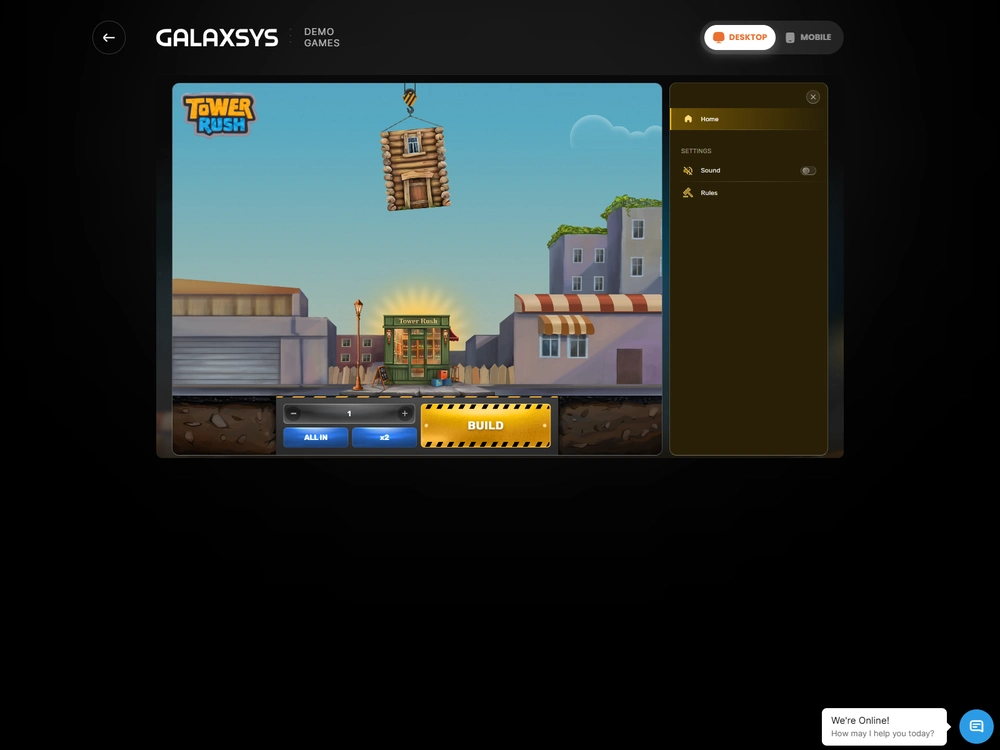
For account limits, time limits and self-exclusion, use the separate responsible gambling page. The fundamental difference between checking an existing result and promising a prediction is discussed in the guide to predictors and signals.
What is useful to understand before a session
Spending control starts with a clear stake, limited time and accounting for commitments already accepted. Frozen protects only the locked portion of a specific round, while stop-loss prevents further entry after settlement. Neither mechanism removes the game's negative expected result.
Doubling looks more attractive by the share of positive model sessions, but comes with a more severe lower tail and frequent loss-limit stops. Compare both the result distribution and turnover. The mathematics page explains the distinction between sample return and RTP in detail.
Questions about strategies
Does a fixed stake guarantee profit?
No. It makes the size of each individual risk clearer but does not change outcome probabilities or guarantee a positive result. In the analytical model examined, the fixed-stake policy has a negative mean result.
Can 0.485 be treated as the probability of a successful floor?
No. It is the probability of an outcome paying 2× in a separate two-outcome model. Its distribution does not reproduce Tower Rush floor mechanics.
Why does doubling have a positive median and a negative mean?
Positive sessions occur often enough, but larger losses in the adverse part of the distribution pull down the mean. The median and mathematical expectation answer different questions.
Will the limit stop the loss at exactly 300 INR?
Not necessarily. The model checks the limit after settling the accepted bet, so the threshold can be overshot. It prevents the next entry rather than changing a result already obtained.
Can FUN be withdrawn after a successful strategy?
No. FUN is a virtual demo unit. A positive demo balance does not become a deposit, real-money game funds or an external bank payout.

About the author
Author: Karthikeyan Sengupta
Role: analyst of iGaming, Betting Sport and Gambling products
Experience: 7 years analysing online casinos, gambling and payment systems
Published: 4 November 2026
Devices: Realme 14 Pro+, Android 15, realme UI 6.0 / iPhone 15 Pro, iOS 26.5